"Time is Everything / Time is Nothing"
Reflections on Long-Duration Soundworks and Radio
Time Flies
Although it happened 25 years ago, I can still recall it with great clarity...
It was just after midnight on a Friday night and I was scanning down the FM dial listening to Detroit radio stations with a pair of headphones strapped on. Amidst the rock, country and MOR music I suddenly stumbled across something very odd. It was a steady stream of strange electronic whirs and whistles. As I sat transfixed to the sounds filling my head, I heard the some real-world images amidst the sonic collage... jet engines, deep breathing and, most obviously, fragments of various national anthems. For an impressionable teenager, these sounds came as a revelation.
I kept on listening... awaiting an ID of this sonic delight. At one point, a few faint clicks reassured me that I was, in fact, hearing something playing from an LP record. After 2 hours of anticipation, my patience had been rewarded when the announcer from the Detroit NPR station identified the piece as Karlheinz Stockhausen's "Hymnen" and adding some precious details. At that point, I realized that I had been taken around the world though the magic of musique concrete. Not only was this work particularly "non-musical" to my ears but, it had kept my attention for two hours. To me, this was a revelation.
After that experience, I hurriedly special ordered a copy of the record album and anxiously awaited its arrival. Upon getting the LP home and reading the liner notes, I realized that proper listening would require an entire evening devoted to this specific task. No problem. This would be my first venture into the appreciation of a serious long-duration work.
Time Passed

In 1986, fellow composer Gerry Collins returned from Darmstadt spinning tales of the interesting music which he heard that summer. One of the pieces that seemed to have had the greatest affect on him was the premiere of Morton Feldman's "For Christian Wolff". Clocking in at 3 1/2 hours, Gerry observed that after the first 20 minutes one would just sink back in their seat and let the sound wash over them for the duration of the work.
The following year, we traveled down to see Feldman lecture at the Detroit Institute of Arts. His topic was"Setting Beckett to Music." During the course of the 3 hours in the lecture hall, Feldman told numerous stories highlighted by the presentation of many lengthy pieces of music. As we sat in the front row, Feldman sat down beside us and passed along a copy of the score. These huge pages with countless staves of music were scarcely dotted with ink.
The music played and one would lose complete track of time. Each note seemed to hang suspended in the air and exist in its own universe, divorced from what came before or would eventually follow. Insitinctively, I knew that this very special effect was something that I wanted to incorporate into my own future compositions.
A few months later, Feldman passed away and I composed "Endgame (for Morton Feldman 1926-1987)" in his memory. At only 13 minutes in duration, I managed to capture some of the essence of suspended time into this composition. Correspondence from Samuel Beckett referred to it as "strange and moving and a worthy tribute to Morton Feldman". Equally positive reactions were received from audiences at its premiere in 1989 and its subsequent presentation in Montreal at the >>Perspectives>> CEC Electroacoustic Days event in 1991.
The Complex Nature of "Simplicity"
In 1989, I began work on what developed into my first truly "long-duration" piece. The work "Loop2" was included as a part of the 1989 CEC Electroacoustic Days at Banff entitled >convergence<. It was played over the facilities of Radio 89.9FM. The notes from the program guide probably outline the process best:
"Imagine 4 tape decks started simultaneously. Each machine contains an endless loop tape of a different length. As the tapes play, they gradually start to interact differently with each other as they independently circle back to their respective starting points and continue to play. In this case, the tape machines have been replaced with a single computer into which the 4 parts have been programmed. The version presented at >convergence< is an abbreviated installation performance lasting 7 hours and 15 minutes. In order for the piece to actually play through one entire time (i.e., so that the 4 parts all line up at bar 1 again) would require the computer to play for approximately 10 months (24 hours per day). This piece was realized with the aid of the Yamaha CX5MII/128 Music Computer System."
This work consisted of only two sound sources - a digital piano sound and an analog synth string pad. Over the course of the playback, the four tracks of information slowly worked their way producing events from single notes to chords. The aural effect can be equated to a slow motion version of an Eric Satie piece. Whereas a work such as Satie's "Vexations" was based around a single motif lasting less than two minutes but repeated 840 times... "Loop2" is probably closer in spirit to John Cage's "Cartridge Music" performances. Subsequently, "Loop2" was broken down into seven one-hour segments and played over a one week period as part of CHRW (London, Ont.) "Radio Possibilities Week" in March, 1991.
Over subsequent years, as I worked on other compositions, I also continued to put my energy into the development of further long-duration pieces. In 1994, I completed the work "Recurring Dreams of the Urban Myth" (a.k.a. "Loop6"). The piece was premiered in its entirety on CHRW in May, 1994. With this piece, my intention was to add more layers to the composition.
Recurring Dreams - Part #1 - 1:00:53
Recurring Dreams - Part #2 - 1:00:23
Recurring Dreams - Part #3 - 1:00:29
Recurring Dreams - Part #4 - 1:00:40
Recurring Dreams - Part #5 - 1:00:01
Recurring Dreams - Part #6 - 59:56
To flesh out a piece of such a nature is a difficult task. This is the point where one discovers the true complex nature of so-called "simplicity". The elements contained within the piece cannot work themselves to a point of dense cacophony. As the piece progresses over the minutes and hours, it will work itself into its own pools of sonic density but, one cannot compose in such a manner with the idea of deliberate crescendos of sound. The best approach is to embrace the uneventful without perpetuating the mundane. This, however, is easier said than done.
"Recurring Dreams of the Urban Myth" started with a similar sparse musical nature as "Loop2". To this atmosphere, a low, constant drone was added that would continue throughout the piece. The main part of the "melodic" information of the piece centered around layers of analog string sounds which had been modified to provide an almost ghost-like image of strings.
In order to ground the work in some sort of real-world framework, a tape recording of urban environmental sounds was added to the mix. This recording was also modified to set it at a distance in the soundscape and looped so that it would make several appearances in the work over the course of its six hour duration.
In the end, "Recurring Dreams of the Urban Myth" served to refine my personal approach to electroacoustic composition, environmental soundworks and long-duration works.
Beyond the Urban Myth

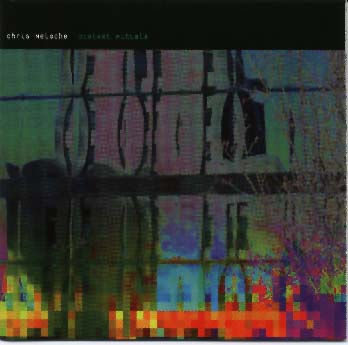
Since that 1994 work, I have continued to devote time to other such long-duration pieces. "Distant Rituals" (1995) served as a deeper exploration into the "environmental" aspects of such works. In this piece, the "melodic" element of the composition was almost eliminated from the picture in deference to the loops of various environmental recordings. This has been, perhaps, the most "abstract" representation of these works.
"Surfacing" (a.k.a. "Urban Myth 2", 1995), took many of the elements explored in "Recurring Dreams of the Urban Myth" and expanded on them to a different level. In this work, the melodic elements were brought further into the foreground while dense layers of manipulated environmental sounds were constructed in a manner so as to give the final work a much more three-dimensional perspective.
Dreams Never End (a conclusion)
To finish, I think that the liner notes to the CD version of "Urban Myth 2" (Etherworld Recordings, San Francisco) sum up my thoughts regarding on this process and its effect on the listener in a rather succinct manner...
"Now that things are so simple, there is so much work to do." Morton Feldman (1926 - 1987)
"urban sprawl... urban decay... urban myths... the silhouette of buildings reach toward the sky like huge teeth on the horizon... sound and vision... compliment and contrast....
When I began this project, I did not necessarily intend it to result in the follow-up to "Recurring Dreams of the Urban Myth" (FAX PS 08/54, 1994). It just happened to take a turn in that direction. It was, however, started as another in a series of long-duration works designed for overnight radiophonic diffusion. These pieces are designed to take advantage of a "closed system". That is... certain sonic parameters are defined and then the process is set into motion. Essentially, this musical action is designed to imitate an organic process as in nature. Each part of the work is set free to loop around and repeat in its own time creating an ever-changing soundscape.
Each of these works is unique in its own way, even though many of the basic building blocks are similar. "Recurring Dreams..." created its atmosphere with a distant and nebulous sense of focus incorporating synthesized sounds (including a continual grounding drone throughout) as well as elements from nature and urban life.
"Surfacing" ("Urban Myth 2"), however, gives a more three dimensional impression. Here the listener is not only surrounded by the sound sources but also drawn in different directions by them. To say that such works are static and lack a sense of progression is definitely a misconception. In fact, they often have their largest effect when one is not necessarily paying close direct attention. *Stasis*, in this context, is in the mind of the listener. By either paying close attention or little attention, the *level of focus* on the sound will change. As the *focus of perception* changes, so too will the impression of the sound."
[copyright Chris Meloche, 1999]
Social top